233. Women In Leadership: Success In a Male- Dominated Industry & Mentoring In The Workplace


The most capable person in the room isn't always the one who gets promoted. Ashwini Balasubramanian learned that the hard way.
In this episode of The Leader I Needed, James Rosseau Sr. sits down with Ashwini, an author and seasoned executive who spent years climbing in the male-dominated world of automotive. She is honest about the season she calls "faking it," when she blended in so well that her colleagues told her she'd become "one of the bros," and the moment that finally forced her to bring her full self to work instead.
She digs into the difference between being a culture fit and a culture add, why she stopped chasing titles and started chasing skills, and what she did after getting passed over for a promotion, a move that turned a painful no into a mentoring relationship she never saw coming. Along the way she shares hard-won lessons on women in leadership, why real influence starts with generosity instead of transactional networking, and how mentoring others became one of the most fulfilling parts of her career.
If you have the title but feel like you're faking the rest, this conversation hands you the map.
Listen on YouTube, Apple, Spotify, or wherever you get your podcasts.
Get Ashwini's book, Map Your Ascent: https://us.amazon.com/stores/Ashwini-Balasubramanian/author/B0H7T39FHG?ref=ap_rdr&shoppingPortalEnabled=true&ccs_id=0ef015b3-0cf8-4d2e-9152-4fbc1cf04205
Connect with Ashwini on LinkedIn: https://www.linkedin.com/in/ashwini-balasubramanian/
Visit her website: https://mapyourascent.com/
Trig (00:00.482)
Hey family, welcome to the Leader I Needed, where my goal is to help you become a great first-time manager. It's literally that simple. And today to help me with that conversation and help me with that purpose is Ashwini Balasubra Manian. She is an author, she is an experienced executive, but she's also very transparent about some of the challenges on the road to getting there. Ashwinney, welcome to the podcast. How are you?
Ashwini Balasubramanian (00:25.174)
Thank you. I am okay. I'm trying to enjoy the last bit of good weather we have. I'm located in Metro Detroit. So I'm trying to enjoy the good weather while it lasts before winter starts to kick in, right? So I'm good. I'm good. Thanks for asking. How are you?
Trig (00:38.796)
I bet that's yeah. Good, good, good, good. I think we're all doing that. I think I I earlier this week I was I was not trying to let go of my shorts. I wore shorts all week until today. So the day I finally put on some full length jeans. So yeah, I'm with you.
Ashwini Balasubramanian (00:45.024)
Yeah.
Trig (00:57.24)
Well, let me ask you a question to get going. before we talk about the full arc of your career, I want to hit one thing that has been I think very apparent to a lot of people who listen to the podcast recently. And that's the I would, you know, theme it as imposter syndrome, right? And this feeling of feeling like you're kind of faking it as a leader. Can you think of a time for you during your career journey where, you know, or or even the first time would be helpful?
Ashwini Balasubramanian (01:14.224)
god, yeah. Uh-huh.
Trig (01:25.57)
that you felt like you were faking it and then you you realized it and what what did that feel like while you were going through that?
Ashwini Balasubramanian (01:31.637)
Yeah, yeah, it's a really good question because I talk about this extensively in my book as well. so you know, if you look at my career arc, I've been mostly in automotive. and as you can imagine, automotive is a very male-dominated industry. it's not as gender equitable as I'd like it, yet we're continuing to make steady progress, but we're not where we need to be. So when I initially started my career in the industry, I was always bold.
Trig (01:47.692)
Mm-hmm.
Ashwini Balasubramanian (01:59.563)
tha that was not the issue, but I think I was so focused on fitting in, right? Like making sure that I was accepted, I was, you know, fitting in. I talk about this very specific episode when I worked for Toyota. and, you know, I w got so comfortable being amongst the men. I almost dressed like them, you know, I wore
Trig (02:05.014)
Mm.
Trig (02:18.934)
Mm.
Ashwini Balasubramanian (02:21.952)
you know, shirts, khaki pants and probably dressed like them and also, you know, talked like them. And I remember there was an instance where we were all traveling for some product testing and we were all having, you know, dinner, people were having drinks and then after a few rounds I was like, guys
You shouldn't be saying that I'm still here. Hey, you realize I'm here, right? And they're like, Ashwini, you're one of us. You're a bro. You're not a girl, right? So they they there was no vicious intent there. They were just telling, Hey, you're one of us, right? Like we don't think and we don't filter when we talk to you. And I have to tell you, honestly, I was so proud of myself. Like I felt like, man, I'm finally part of this bro gang. I'm like in here and I'm doing it.
Trig (02:47.909)
Trig (03:01.006)
Mm.
Trig (03:06.158)
Right.
Ashwini Balasubramanian (03:08.512)
What I didn't realize at that time though is that by doing that, I was actually holding myself back from bringing my full impact to the organization. Right. And it actually took a big disruption to my life for me to understand that. So while I was working there, I became pregnant with my first child. And I quickly realized a lot of things I did before in order to fit in no longer were serving me well.
I couldn't wear the typical, you know, men's dress shirts anymore because they don't make for women with a belly. So you have to go into clothes. So even from the clothes I wore, I had to change that up significantly. And I started realizing like the challenges I had, the kind of mindset I was having.
Trig (03:42.402)
Mm-hmm.
Ashwini Balasubramanian (03:55.465)
Not that anyone was vicious or setting out to like not understand me. They just didn't have the same experiences as I did. So it actually forced me, I would say motherhood was probably the first biggest inflection point in my career, where it forced me to say, I gotta bring my full self to work. Like this is not gonna work for me if I don't do that.
Trig (04:02.391)
Yeah.
Trig (04:16.206)
Yeah.
Ashwini Balasubramanian (04:16.308)
Because I just can't survive by acting like I fit in. so I would say that that was the biggest inflection point where I realized it's okay to stand out as long as you're adding a new perspective, as long as you're adding value. So you have to think about your role more from the standpoint of how am I adding value to the team?
Trig (04:37.678)
Absolutely.
Ashwini Balasubramanian (04:38.452)
And not so much worry about fitting in and counterintuitively, once I started doing that, I think my career actually took off.
Trig (04:46.166)
Yeah. You know, well I've got so many questions. let me ask you this. I'm worried I'm I'm l I'm a little worried about the audio quality. Do you 'cause I can I can hear the background a little bit. Do you do you have a microphone you can plug in by chance? Okay.
Ashwini Balasubramanian (05:00.16)
Let me try this and see if it's better.
Trig (05:13.486)
That's okay.
Trig (05:17.016)
Such it's gonna be such a good conversation. I wanna make sure we get get good quality.
Ashwini Balasubramanian (05:21.91)
Okay. Can you hear me okay now?
Trig (05:27.79)
I'm still hearing like a room, a room in the background. Is that? Let me see one second.
Trig (05:54.983)
really? I can stop and we can restart. Let me let me stop her for a second.
Trig (00:00.45)
So, so let's let's dive into that a little bit because in what you just said in such a succinct way, there's so many pieces of that, right? So so one is that again, that moment of like, wow, I'm a part of the bro gang. I have been accepted, I've worked hard to get here, I'm there. Talk, talk about how long did that feeling last, right? Because I can only imagine it's not like you have it that night and then the next day you say, Well, wait a minute, this isn't right. You did you sit in there for a while, right?
Ashwini Balasubramanian (00:16.769)
Yeah.
Ashwini Balasubramanian (00:27.161)
No, no. Yeah, yeah, you're absolutely right. I think it lasted almost a year without me realizing that I was holding myself back, right? And I was doing a disservice to the organization because I was not thinking about why did they actually hire me? They didn't hire me because I could become one of the bros, right? They hired me because I had my own point of view. I had my own strengths and perspectives to bring to the team. and I think
Trig (00:33.794)
Wow. Yeah.
Yeah.
Ashwini Balasubramanian (00:56.407)
In in the light of trying to fit in, I was holding myself back and I wasn't sharing every perspective that needed to be shared. So I think one important thing I always tell my mentees and people that you know we try to hire and as we are interviewing others is it's important to understand if they will thrive in this current environment, in the organization you're interviewing someone for. But it's not it's not necessary that they be a culture fit. They can be a good culture ad.
Trig (01:00.974)
Ashwini Balasubramanian (01:24.623)
So I think that distinction is very important because I think that's when you allow diversity to come in, you allow diverse perspectives to come in, because that's when you can solve challenging problems in a very creative way, right? you just look for culture fits all the time, you will just encourage groupthink and that can be very dangerous for organizations overall.
Trig (01:24.878)
Mm.
Trig (01:47.064)
Totally, totally agree. 200%. I l I love that phrasing too. You don't have to be a culture fit, you can be a culture ad, which to your point speaks to the maybe elasticity is the wrong word, but that the fact that cultures continuously evolve if we are open to it, right? And so, what would you say to the new first-time manager, right? Who is struggling with the same thing you were struggling with? You're struggling with wanting to be
except it also wanting to do well as a first-time manager and people leader. And so struggling with all those things and is doing the exact same thing you were doing, which is to a certain degree assimilating and giving giving up being the best they can be, but at the same time hyper worried about rocking the boat. What's your advice to them?
Ashwini Balasubramanian (02:36.537)
Yeah, yeah, yeah. I I think I've struggled with that too, but what I've understood over so many years of my own career is that we sometimes, especially when we take on new roles that are in leading
Trig (02:52.218)
I said your recording stopped. Let me let me stop this and start another one.
Trig (00:05.443)
So I'm really appreciative of your story and what you shared. And you know, again, you were initially assimilating, like proud to be a part of the club, but then you realize you said it took you a year to say, well, look, that's not allowing me to bring everything I can bring to the organization. What do you say to a new manager, maybe a first time people leader who is dealing with all the challenges of going from being that individual contributor? Now they've got all the administrative, whatnot, of being a team leader, but now they're also realizing, well, I
I actually need to be part of this new leadership team and such. And maybe in that same place you were of faking it and assimilating and are scared to rock the boat when they know they need to truly be themselves. What are you, what's your advice?
Ashwini Balasubramanian (00:48.15)
I think it took me a while to learn this over time in a hard way. So I think it's really important we share this with more people. I think there are three aspects, right? So the first one is I think you move away from the intent to impress people because usually when we go into a new role, a new company, we're very focused on it's just how humans are wired, right? Like we are wired to impress people. I had to say that I'm gonna unlearn.
Trig (01:04.087)
Ashwini Balasubramanian (01:15.99)
And I'm gonna focus on creating impact. So moving away from impression to impact is super important. Because when you focus on impact, you know the actions you need to take in order to create the impact you were hired to create, right? So I think that's w a very important distinction to understand. And if you're a first-time people leader, I honestly thought that being an extrovert, you know, my social charm and all of that will be great assets to lead people.
Trig (01:41.113)
Right.
Ashwini Balasubramanian (01:43.862)
It can be helpful, but they are not a guarantee that you'll be successful as a people leader. Because being a people leader means being generous. And when I say being generous, not in the sense that you're trying to be their friend, but being their coach, their mentor, you know, they should know that you have their back, which means you're gonna take a few bullets for your team sometimes and be the buffer that need you need to be. So I think understanding that it's not about being popular and liked, it's about being
Trig (02:02.029)
Yes.
Yes.
Ashwini Balasubramanian (02:13.035)
the person that they remember changed the trajectory of their career, right? So it is important to understand that. The third piece ultimately I think is you have to keep focusing on how do you leave that team better than you found it. Like even after you have exited the team as a people leader, there is no scarcity of people that can take your role. There is no scarcity or you know cle lack of clarity that the team will perform well in a sustained manner.
Trig (02:17.011)
Mm.
Trig (02:28.831)
Absolutely.
Ashwini Balasubramanian (02:42.879)
I always think your success truly is determined by how your team continues to stay successful after you've left the role. So I think these are all the three things I keep in mind while I take on new roles with expanded leadership. and like I said, I was under the impression that you can work your way through people leadership roles if you have good approachable behavior, demeanor.
Trig (02:42.977)
Mm-hmm.
Trig (02:50.392)
Yeah, absolutely.
Ashwini Balasubramanian (03:07.903)
And you're kind and you're, you know, extroverted and you're charm, it's far from the truth, right?
Trig (03:07.96)
Mm-hmm.
Trig (03:13.304)
Far from the truth. So far from the truth. You know, one of the things you mentioned in some of your materials you previously sent was this this this part of your journey where you experience this slow erosion of belonging invisibility. I want you to I would just love you to unpack that a little bit, right? Because it's almost like, you know, different vignettes. The first vignette, you get in, like you said, you finally get to the bro gang and things are happening. Awesome. A year later, you say, Whoop.
Wait a minute, let me be truly me and do different things. But then, you know, we go through seasons. So you knew you had this other season of feeling like you were again eroding in terms of your belonging invisibility. When did you first wake to that? And what did that season feel like?
Ashwini Balasubramanian (04:00.545)
I think for me, you know, the yes, all of us are working for a paycheck so we can have a good life, you know, the quality of life. and especially for someone like me that came from such a small village in India, to be able to be where I am today, super grateful for the journey and the opportunities along the way. But I'm my nature is that I'm never satisfied with status quo, right? Like I'm always thinking about
Trig (04:25.528)
Mm.
Ashwini Balasubramanian (04:27.467)
What can I do better? W where can I grow? What is the next challenge I can go after? So my mindset is usually attuned to what skill set can I go after? What kind of challenge can I go help solve for the organization? So because of that, monotony, like once things settle down and monotony comes in and I'm just kind of cruising along, I feel restless and I feel the need to make a shift, right? So that's usually my indication of saying,
Trig (04:49.249)
Mm-hmm.
Ashwini Balasubramanian (04:56.469)
I kinda know what I'm gonna do every day. And every day kind of looks the same. that starts to bore me, honestly, and I feel like I need to make a shift, right? Like I feel like I've executed what I need to execute, the team is in a good space, they can move forward, even if I am not here, and then I'm I know I'm ready for the next role. there was one and you can't always control when you go to the next role, also, right? Like it's
Trig (05:05.034)
Mm-hmm. Mm-hmm.
Trig (05:16.354)
Yes.
Trig (05:24.853)
Mm-hmm.
Ashwini Balasubramanian (05:25.823)
It's hard because not all the time you can say, Okay, it's been two and a half years, I should be in the next role and things don't just fall in your lap. That's why I talk a lot about, you know, we how do you build your tribe? How do you build your well up so that when you do hit those points in your career, you can talk to people that you already have a relationship, people that already know you, so that they can start opening doors for you. Because you can't open every door for yourself.
Trig (05:32.736)
Right.
Trig (05:50.195)
Mm-hmm.
Ashwini Balasubramanian (05:55.552)
Just solo, right? It's not a solo act. Your career is not a solo act. It is a you know, it is driven by a village, it is driven by a lot of shoulders that you step on to move to the next level. And in order to be able to have those people lift you up, you can't just be the one that's always taking, right? You have to start from a point of what can I give, right? and people don't just hire for competency, right?
Trig (05:56.824)
Right. That's right. That's right.
Trig (06:08.501)
Uh-huh.
Trig (06:20.944)
Mm-hmm.
Ashwini Balasubramanian (06:25.175)
Competency, I think, is available in abundance, right? There are a lot of competent people. What's rare to find is competency combined with courage and consistency, right? when I say consistency, consistency in character, right? So if you are able to make people know, have people know you from that lens of how not just how you are competent, but how you use your competency.
Trig (06:29.41)
Absolutely.
Trig (06:35.02)
Mm-hmm, mm-hmm.
Ashwini Balasubramanian (06:53.451)
to make impact, not just for yourself, but for the people around you, you start building a reputation of people wanting you to be successful, right? so that's that's kind of how I I talked about, you know, what triggers me to look for my next role. but I also think, like I said before, you know, career journey is not a solo climb. So you have to kind of build that generosity and gravity well before you need to make those climbs.
Trig (07:01.708)
Yes. Mm-hmm.
Trig (07:08.944)
Mm-hmm.
Trig (07:15.672)
Yeah.
Ashwini Balasubramanian (07:23.313)
and it is my absolute favorite quote from the book. I I say that if you want to build influence, you have to start with generosity. I think we've talked about networking in a very transactional way. I find it very exhausting. So I actually think if people know who you are and how you bring your competency to impact others in a consistent way, you have a much better chance of people rooting for you and pulling for you.
Trig (07:33.043)
Mm, that's good. That's good.
Trig (07:43.159)
Yes.
Trig (07:51.821)
Yeah, no, that's good. You know, one of the things that jumps out to me, 'cause I I totally agree, networking is typically spoken of in a a give get versus you know, I had I had a great mentor and friend who used to say, just just give, right? Just give and just you know, and expect nothing in return, quite honestly.
Ashwini Balasubramanian (08:00.247)
Correct, correct.
Ashwini Balasubramanian (08:05.461)
Yes, yes.
Ashwini Balasubramanian (08:10.175)
It is such a simple but so powerful statement. Such a powerful statement, right?
Trig (08:13.472)
It really is. It really is. and you know, one of the things when you do that, I do think you you set a lot of seeds of goodness and I will call them trust deposits, right? Because we will make withdrawals sometimes without meaning to make a withdrawal, right? And so and so, you know, make as many, many deposits as you can along the way.
Ashwini Balasubramanian (08:28.917)
Yes, yes.
Correct, correct, correct.
Trig (08:39.748)
which is which speaks to the next thing really I want to talk about really is just, you know, how you show up, how you show up in terms of personality and things like that, and even the distinction you made in terms of competence versus what I might call soft skills, right? So you know, emotional intelligence, right? Self-awareness, self-regulation, all those different kinds of things. How do you think about that when you think about what we just talked about of again kind of devolving inclusion?
Ashwini Balasubramanian (08:39.959)
Correct.
Ashwini Balasubramanian (08:59.373)
Mm-hmm.
Trig (09:09.776)
how women may be perceived in the workplace. And again, overlay that with let's overlay that with the let's call her Susie, the first time new manager Susie, who is thinking about all those things and quite frankly could just shut down because it seems overwhelming. How do you how do you show up?
Ashwini Balasubramanian (09:29.345)
Yeah, I think I've had some tough conversations in my career where you know I I I also am the president of a nonprofit outside of my D job called Automotive Women's Alliance Foundation. we are focused on empowering and advancing women in automotive through coaching, scholarships, mentoring, connecting them with the right people. And in that line of work, like when you talk to
Trig (09:43.096)
Mm, nice.
Ashwini Balasubramanian (09:57.536)
your colleagues, well meaning colleagues. I have people that say, Well, you folks keep talking about, you know, how women are not advancing. You know, they need more opportunities unlocked for them. We are making progress. Nobody talks about that, right? You should be grateful for how much progress we've made. And I always tell this to people that say it, I said, your intentions are really good, but what I want to remind you is
Trig (10:13.048)
Mm-hmm.
Trig (10:21.72)
Yeah.
Ashwini Balasubramanian (10:24.403)
Every time we take a step in the positive direction, women are always told to wait their turn.
Trig (10:31.736)
Mm, mm, mm, mm.
Ashwini Balasubramanian (10:33.589)
Right? So women are always told, see how far we've come. Right. I remember two generations ago, my grandmother didn't even have a chance to go to school. Right? And then my mom's generation, she had a chance to go to school, get an education, but didn't have a chance to be in the workforce, even though she's immensely talented. but now I have the opportunity to go into work and make a mark. Yes, we've made progress, but have we come far enough? No.
Trig (10:37.238)
Yeah.
Trig (10:43.468)
Yeah.
Trig (10:51.212)
Yes. Yeah.
Trig (11:03.713)
No.
Ashwini Balasubramanian (11:03.797)
Right. So just because we've made progress doesn't mean we become complacent and we don't need to tell women to slow down or wait for their turn. Right? I think until we are at a fifty fifty level, I don't think we've achieved what we needed to achieve. it's not about taking away opportunities from other people. It's about making space for everybody to have access to the same opportunities and then the best candidate has to win.
Trig (11:08.44)
That's right.
Trig (11:12.536)
That's right.
Trig (11:22.317)
Mm-hmm.
Trig (11:31.404)
Yeah. Right.
Ashwini Balasubramanian (11:33.056)
Right? Whoever has the best ability to do the job, to drive the best results, has to win the role. It doesn't matter what gender they belong to. But having access to opportunity is where we lack equity. So I think that's a lot of philosophical talk. But what do we do when you're in the role and you are you know, you feel like you are being told, Yeah, yeah, you're doing, you know, great, but then you don't ever get considered for a promotional poll.
Trig (11:38.818)
Yeah.
Ashwini Balasubramanian (12:02.175)
I think the best way to do it and how this is how I handle it and I talk about it in my book. there was one instance where, you know, I've I received great review on my performance feedback and then I applied for a role that was in a different department and I level up. What bothered me was I never even got considered to be in the candidate pool. I wasn't aspiring and you know, I didn't feel entitled to get the role. I felt like I had to fight for it and I have to prove my capability in order to get it.
Trig (12:12.6)
Mm.
Trig (12:23.008)
Mm.
Ashwini Balasubramanian (12:31.809)
But I never even ch had the chance to prove what I bring to the table. So I actually went to the hiring manager after they announced the person and I said, Hey, I understand you found the right candidate for the role, but can you give me feedback, like real raw feedback around why I wasn't even considered, right? And he turned around and he said, Ashwani, you're great at what you do, there's no doubt. We're in a very narrow support function.
Trig (12:34.048)
Ashwini Balasubramanian (13:01.153)
This role requires business acumen. It requires somebody that can think very strategically long term, has to be comfortable with product portfolio planning and so on. I don't see those in your current skill set, right? While it was hurtful to hear the feedback, I had to tell myself, this is actually a good thing. He's telling me tangible skill sets I need to go after. And if you remember with the start of the discussion, I said I like to go after skill sets, not titles, right? So
Trig (13:06.282)
Mm-hmm. Mm-hmm.
Trig (13:20.438)
Right. Right.
Trig (13:28.994)
Yes.
Ashwini Balasubramanian (13:29.749)
With that, I was able to actually turn that relationship into a mentoring relationship and say, Hey, can you teach me what I need to learn? Right? Can you spare forty-five minutes? Because I think the biggest thing someone can give you is not even advocacy. I think it's time. Right? If they can give you time and they can teach you how to close the gaps in your skill sets, you need to jump on it. So long story short, I what I'm getting at is I think if you feel you're getting passed over, if you feel like you're not being considered.
Trig (13:36.16)
Mm.
Ashwini Balasubramanian (13:59.084)
I think the first step is to understand if there is real constructive feedback that you can get on understanding how to close the skill set gaps you might have. But if you just get a bunch of how do I say this politely, there's no way to say this. Just a bunch of bullshit around, you know, just political talk around why you were not considered, you have to understand that you maybe don't have a future in that organization and you need to find a different train to get on.
Trig (14:02.485)
Trig (14:18.774)
Yeah. Yeah.
Ashwini Balasubramanian (14:29.579)
I've done both, right.
Trig (14:29.612)
That's good. That's good. That's good. I wanna, yeah, that's really good. I wanna recap what what I think I heard you say. one one is right, didn't get the role, but having the courage to respectfully ask why not? Because there's so many different ways you could have chased that, right? You could have gone around the lunchroom. I can't believe they didn't consider me. Right. I mean, I can't believe, right.
Ashwini Balasubramanian (14:43.021)
Correct, correct. Yes, yes.
Right, right, right.
Trig (14:54.338)
That never works well, by the way. Just want everybody to understand that when you start doing that, kind of the meetings after the meetings and going around whatnot, usually it doesn't work well. but you also didn't go to the person with kind of the assassination of I can't believe you didn't consider me. Why not? You asked for clarity, right? so that's part one. And then part two, once you got the clarity, you then up to ask to can you show me and help me get those things, right? Which
Ashwini Balasubramanian (15:09.357)
Correct. Correct. Yes.
Ashwini Balasubramanian (15:21.453)
Correct, correct.
Trig (15:22.572)
Which could turn a mentorship and quite frankly could could have could turn a sponsorship sometime because the person comes it actually did. So there you go. Right. So I love that. That's such a great story. as we like start to wrap up, I wanna talk about what you've been doing with the employee resource resources groups, right? Why you took those on and what you've been doing there.
Ashwini Balasubramanian (15:27.105)
It did. It actually did. Yeah, yeah, it did. Yeah, yeah.
Ashwini Balasubramanian (15:40.919)
Yeah, yeah.
Yeah, so outside of the Automotive Women's Alliance Foundation where I'm the president, this was about fourteen years ago, when my second child was born and I came back from maternity leave. He was a pre me, and I had actually moved jobs while being pregnant, so I didn't have enough FMLA accumulated to take the full twelve week maternity leave. So I came back in six weeks. So I found it really hard to like manage
Trig (15:54.637)
Mm-hmm.
Trig (15:59.872)
Mm.
Ashwini Balasubramanian (16:13.631)
you know, the high expectations at work, feeling guilty of leaving a premi baby in daycare. I felt pulled in so many different directions. And I remember sitting in my desk one day and thinking, God, I'm not the first woman to have two children or have a premi baby and have to work, right? There are tons of single moms out there that are doing things that are much harder than I I have ever dealt with. There's gotta be a way I can lean on other women and ask for help.
Trig (16:28.64)
Mm.
Trig (16:41.261)
Yeah.
Ashwini Balasubramanian (16:41.465)
so I actually went up to HR and said, Can we like pull together a women's resource group where we're like helping each other with best practices, coping mechanisms? And they said, Well, we don't really have the bandwidth to do that, right now. We'd love to help you, but we don't have the bandwidth. And I usually
Don't take no for an answer, right? It's not in my nature. So I said, you know, I would you mind if I took this on and I tried to do something that is more of a resource group and not it's not an activist group, it's a resource group that just wanna support and help each other. and I said, Yeah, yeah, yeah, knock yourself out, just don't drop the ball on your day job. So I went and found fifteen women in my building, pulled them together for ninety minutes, thinking I'm gonna ask them and get all this
Trig (17:03.276)
Yeah, good.
Trig (17:16.652)
Right. Right.
Ashwini Balasubramanian (17:30.38)
you know, wisdom and knowledge. I have to tell you, Trigger, I walked away from that ninety minute meeting and said, God, I don't have any issues. You know, there are women that are dealing with terminal illnesses, caregiving issues for parents, single moms that are juggling two jobs, one full time and a part time. And I'm thinking it's like everybody's carrying so much weight. Like you peel behind the curtain, there's so much weight everybody's carrying.
Trig (17:31.776)
Mm-hmm.
Trig (17:39.746)
Wow.
Trig (17:43.338)
Yeah. Yeah.
Trig (17:50.883)
Mm-hmm.
Trig (17:55.437)
Yeah.
Ashwini Balasubramanian (17:59.0)
This is no longer just a me problem trying to find how I can get support. This is a much larger problem than just Ashwini's issue. So I slowly started building out a strategy, went to a lot of executors to pitch for funding, to bring training and so on. And word of mouth things just started spreading, right? Even before we had a formal name and funding, we just had women show up for lunch and learns, we would watch TED Talks and we would discuss
Trig (17:59.145)
Mm-hmm.
Trig (18:26.24)
Mm.
Ashwini Balasubramanian (18:28.537)
how do we overcome this stuff together. and in six years, in the eight years that I was there, it grew from that fifteen women that just fet met on that first day to about six hundred women in the resource group, right, by the time I left the company. and I can tell you it was one of the most fulfilling things I've ever done in my career. there are so many stories of women being retained and being mentored and finding new roles.
Trig (18:40.248)
Mm-hmm.
Trig (18:43.82)
Wow. Wow.
Trig (18:49.784)
Mm-hmm.
Ashwini Balasubramanian (18:57.579)
It's just completely fulfilling and filling an emotional bucket I didn't know I h needed to fill. so I I think I've continued to do what I can for other women in the workforce. and I'm a big stickler for mentoring others as well. Doesn't matter, man, woman, doesn't matter. so anyone that wants to improve, anyone that's driven to improve and bring their impact to the workplace.
Trig (19:03.906)
Yeah, yeah.
Trig (19:18.456)
Mm-hmm.
Ashwini Balasubramanian (19:26.869)
I'm all for giving time, right.
Trig (19:28.076)
Yeah, that's good. Good for you. Cause I I I think that speaks to leadership and I think it speaks to stewardship to your earlier point of lead. I'm just a huge fan of stewardship and to your point of leaving things better than when when you when you started because to your point, that's still going and it will go. but also even just your aha moment is telling, right? That moment of wow, I don't have anything to complain about, right? When you got all these people in the room.
Ashwini Balasubramanian (19:40.267)
Yeah.
Trig (19:54.721)
And before that, you thought you were probably the lonely soldier, right? And then but you had right, exactly. But you had some margin and you had the courage to say, let's set this thing up. But then you you start seeing and learning, right? That the need the the needs are real. Let's let's close on this question. What's one thing you do differently now? Let's say you leave where you are now, you go to a different company, you pick up a direct report team of six people, and then maybe a hundred people under them, so on and so forth.
Ashwini Balasubramanian (19:58.336)
I know. It's perspective. Yeah.
Ashwini Balasubramanian (20:06.219)
Yeah, yeah.
Trig (20:22.998)
What do you do now as that newer leader manager and organization that you didn't do the first time you took on people leadership?
Ashwini Balasubramanian (20:30.891)
Yeah, yeah. So when I first took on the first people leadership, I've always been very honest about who I am. So that hasn't really changed. But I remember the first people leadership role that I took. I was very nervous, honestly, right? Like it's like, my God, if I fail on this one, I'm the first female to be in this role. If I fail, I'm probably gonna close the door for other females and behind me as well.
Trig (20:47.832)
Mm-hmm.
Mm.
Trig (20:56.984)
Mm. That's a heavy weight.
Ashwini Balasubramanian (20:58.187)
So I had that in my yeah, that that was kind of weighing on me as well. so I felt like I was trying to play it very safe initially, right? trying to make sure that I wasn't stepping on people's toes and you know, all of this. But once I made the shift to say, I'm not here to really impress people. I want to focus on the impact I was hired to bring to the team, I've actually started becoming, I would say, more bold.
Trig (21:06.188)
Yeah, yeah.
Trig (21:23.032)
Mm-hmm.
Trig (21:27.456)
Mm.
Ashwini Balasubramanian (21:27.507)
about saying, hey, I might not know all the answers. like this role that I have, I have a lot of industry background, but I am not a material scientist, right? like all the brilliant PhD and chemists we have in the company, I'm not here to teach anybody how to formulate a new product, right? But I do know what I can bring.
Trig (21:49.142)
Right.
Ashwini Balasubramanian (21:51.894)
I'm here to learn. I have enough humility to say I don't know everything. I don't have the answers to everything. But I have a clear vision of where I want us to go. So as long as I can articulate the vision clearly of where we want to go, I ask for help, right? I I tell my team, I can't do this alone. I want you all to understand where we want to go. I want all of you to have a voice in the process of how we get there.
Trig (22:01.399)
Yeah.
Trig (22:08.088)
Yeah.
Ashwini Balasubramanian (22:20.789)
Sometimes you get a voice, sometimes you get a vote. and I'll be very transparent when I'm asking for your voice, when I'm asking for your vote. but the goal is to get there, right? So like I said, it's a combination of saying, can you paint a picture of where you want to take the team and make it exciting and aspirational and inspirational for the team? But then don't be so caught up that you have to know all the answers of how to get there, right?
Trig (22:28.619)
Yeah.
Trig (22:50.412)
Yeah.
Ashwini Balasubramanian (22:50.917)
be humble enough to let the teams teach you, let your peers teach you of what some of the best practices might be and what are the different ways and the diverse viewpoints might be to get to that point as fast as we possibly can. So I think that's been the biggest difference from my first leadership role to the sh role I've taken on recently.
Trig (23:05.856)
That's good.
Trig (23:11.16)
That's good. Can you hold one second? Be right back. 20 seconds.
Trig (23:38.456)
Sorry about that. Let the contractor in. Sorry about that.
Ashwini Balasubramanian (23:42.635)
No worries.
Trig (23:43.852)
All right. Well, I'm gonna wrap us up. well, Ashwinny, the you've given a lot of good counsel today, both from a new leader perspective, new manager perspective, and I think with your perspective on as a woman journeying through large organizations and dealing with a lot of different conflicts and such, just a lot of nuggets. So, first of all, thank you for joining. Second of all, listeners, viewers, please make you sure you pick up her book, map your ascent.
Available everywhere, Barnes and Noble, Amazon, all the places you love to pick up books, and I'm sure it will be a treasure to you. Swinnie, thank you again for joining the Leader I Needed.
Ashwini Balasubramanian (24:23.375)
thank you, Trig, for having me. And it's been an very, very engaging conversation. I would love to hear from your listeners. they can follow me on LinkedIn or Instagram. there are not too many people with my name, so you should be able to easily find me. so if they want to follow and see the content I post, that would be great. And like you said, the reason I wrote the book was essentially to make sure that
Trig (24:38.6)
That's right.
Ashwini Balasubramanian (24:53.065)
I can share some of these nuggets in more bigger volume and also tie it back to the real lived experiences and actually help the reader map their own ascent, right? It's this is not just a career memoir to say, hey, look at what Ashwini has done, right? It's about saying how can you learn from the mistakes I made? Don't make those same mistakes, map your ascent very intentionally and look at change as a very positive force to harness so that you can
Trig (24:55.902)
Mm. Yeah.
Trig (25:04.908)
Yes.
Trig (25:12.704)
Yes.
Ashwini Balasubramanian (25:22.989)
climb the altitude or whatever success means to you, how do you keep moving on the ride with excitement and with you know anticipation for what's next?
Trig (25:26.572)
Mm-hmm.
Trig (25:35.992)
That's good. Very good. Well, thank thank you again for joining. And we'll make sure we put the link to the book as well as your socials and such in the show notes. Thank you.
Ashwini Balasubramanian (25:42.946)
We'll do. All right. Thank you so much, Trig. Appreciate it.
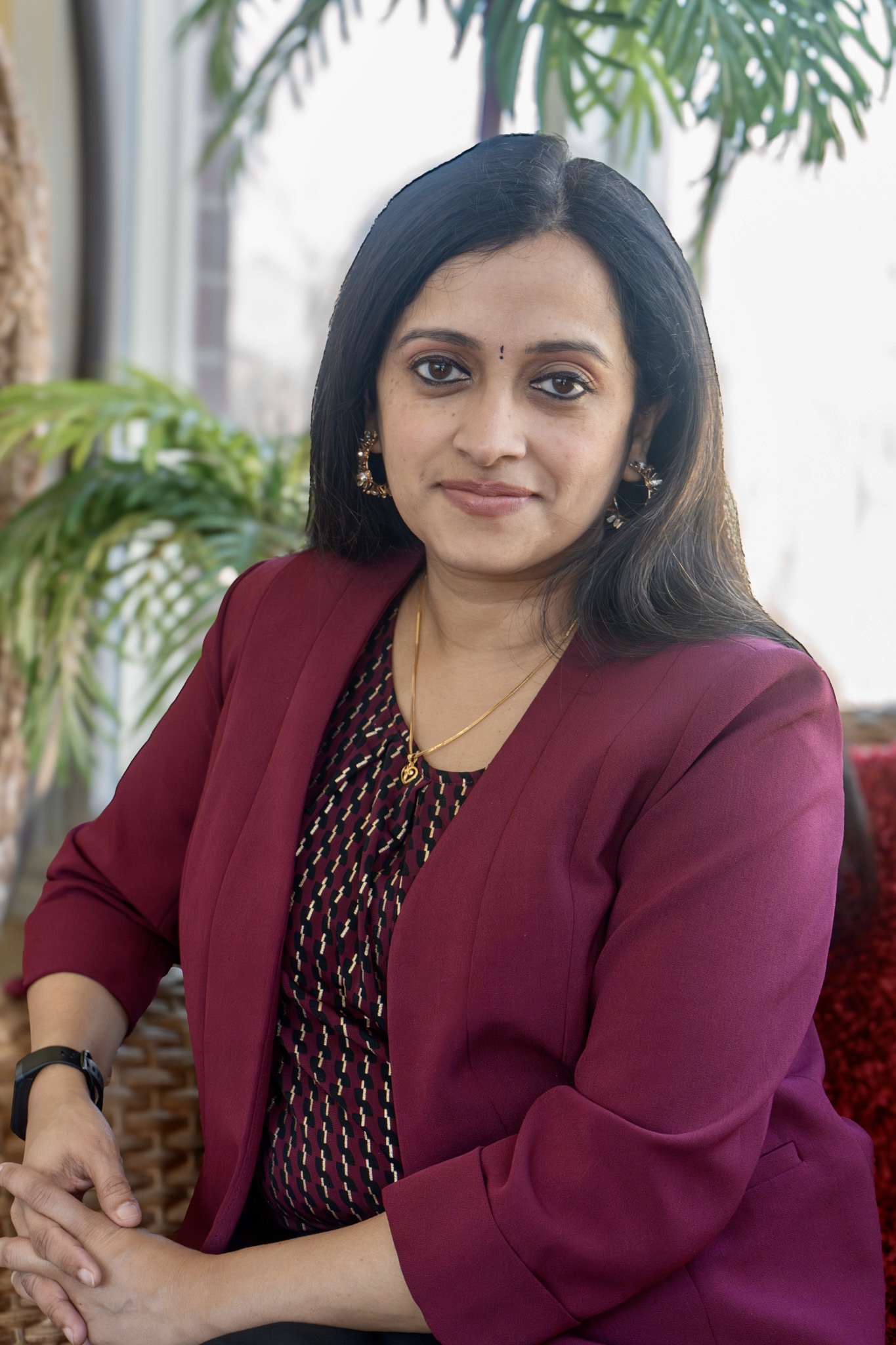
VP of R&D, 3M | Author, Map Your Ascent
I spent 23 years rising through Fortune 500 companies including Toyota, ZF, Martinrea, and Harley-Davidson before becoming VP of R&D at 3M. I founded the women's resource group at ZF after returning from my second maternity leave, served as executive sponsor of the women's ERG at Harley-Davidson, and have led global teams through continuous organizational change at the enterprise level. My debut book, Map Your Ascent: Embracing Change as Your Leadership Superpower, releases September 1st 2026.